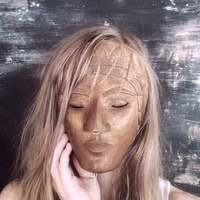
Strangers
School Days in Athens
Φαῖδρος: ναί, παρ᾽ Ἐπικράτει, ἐν τῇδε τῇ πλησίον τοῦ Ὀλυμπίου οἰκίᾳ τῇ Μορυχίᾳ.
Phaedrus: Yes, at Epicrates', in the house of Morychos, here, near the Olympiad.
//
Take words to it,
he said, and words were fire. And yet, you lacked
conviction. Crowded by black memories
of unseen hands and uninvited touch,
as old men’s trembling clammy kindnesses,
their groping behind doors, our voices as
stray syllables, or whimpering with fright,
the muffled passage of another, coaxed
with promises, down enforced aisles, bound by
vocabulary’s sight. Terrible child,
no light escaped the house of Morychos.
So how did you?
At nights, with flashlights,
we stayed up, mapping tangled vacations.
It wasn’t always hellish as it sounds.
We were kept kids, padlocked in battery
cages, our own best teachers, of tossed-off
certainties, known neighborhoods, and always
chasing some kind of slang. To spell the word
backwards, chop up and repurpose pieces,
or make the meaning opposite from what
it was. We traded jabs of pleasure in
the mottled darkness of his maze, tongues of
soft flesh. We rearranged worlds to make our
places.
What would your mother give to you
of time? Faded photos, hand-me-down jeans,
a crayon-drawn map of paradise, you were
a metaphor too well-worn for what you
became, true as, it feels ugly to be
ugly and the resolution offers
no resolution, just this hissing in
my ears, this chaos. Lay down in the dog
bog. Keep trying. Keep gashing out the lines,
edit twisting serpents from the narrative,
and trace the tattered logic left behind,
monster observing monster, overwrought
and double-blind.
History is the final
solution for you, so go, dissolve your words
in time. Let their bleached remains fortify
the temple, your descendants living down
the stupid crime. That’s what
religion was, at home, submission to
the uncomprehended solidarity of
teenage desire, or something like, romance.
On echinacea lawns, she dons glitter
bodysuits, writes parochial poetry
on freedom. We were such creators, in
our nascent phases, molding plastic limbs
to tether our volcanic bases.
I do
not want to go, I beg, don’t take me back.
In wept oceans let me clear the bitter
savor from my eyes. Picnics in real
places, manicures on brand, she painted party
faces, praising God for such justice
as could be found and leveraged there, in
shared maps of iron laces, corset-bound,
hound-hunted hallways exhumed from ancient
flavors of local reason, a child’s small
hand ghostly waving from the window like
a metronome. She swallowed blood and sand
to earn their graces.
Take words to it, I said,
and words were airplanes, it was time, and she
was ready. She heard rumors on the wind
of its disintegration, climbed a hill,
and saw it for herself: the metaphor had died.
The whole, wide world was failing beauty, spread
beneath her like a poem in multitudes,
legs-open bride. And still, she cried. She longed
for absolute intelligence of who
he was, of home, of houses on the street
and what they hide, of where the figure’s corpse
was buried, and what appetites for youth were
still fed and worshipped there.
Take care of it,
he said, and words were memories, to which
she had no scholarly reply. No house,
nor street belonged to her, no shoes or gowns
to pack in chests, but ashes and fresh-breath
mints lost in linings, crumpled tissues, all
forgotten reasons why. Because you were
unseen, you could escape the conflagration?
Not so, although, not too far off. Because
she took my parchment seeded in her and
bad wisdom gained, as blasphemy of sight,
enlightened predation.
If words be fire,
then seek us in my gold and burning bower:
a clown is a bad child with adult power.
//
(About.)
Me, on me. // Feelings are like the wind and you have to adjust the sails to catch them in the right way. And maybe you have to adjust the boat sometimes into these impossibly steep-seeming angles (heel). The boat is built to handle this. (One assumes.)
So (caveat lector, seek your own help, this is me, on me) these are some of my therapies for coping with depression.
When you can’t stop being down on yourself. Make it a game to see which voice in your head can fling the most sublime sh-t. Because games are theoretically fun if you look for the beauty.
Listen to Enya and/or Tori Amos with earbuds, depending on the “complexity” (ugliness) of your needs in that moment. (I save BfP for special occasions. I shouldn’t.)
Accidentally stumble upon something that awakens your compassion. Do a kindness before your depression knows what hit it.
Quit demanding any form of recreation from yourself.
Write a lot, even though you “know it’s sh-t", just remove the expectation to publish.
Take advantage of the situation and let anxieties go, if possible. I was surprised how the depression made it possible. Be your version of an unresponsive, mopey, adolescent asshole. Or a saggy old crone. (Stop wearing a bra, stop trying to people-please.)
Spend time obsessing over the side-of-the-coin that you can’t currently see. Assume there’s a rainbow, over there. Depression is just another perspective. Perspectives are dialectical. You are expressing relations, albeit warped ones, relations. You remain related. Being upside-down-from is also a relation.
(Sorry, Satan.
You have to learn to enjoy the smell of your own armpits.)
Cold damp dark of night ascends, is parted, penetrated by light like swords of angels stabbing through the atmosphere. The remainder is patched parts of gray. Saturday morning is going on, tiny chip-chatterings in coconut trees, sounding roosters-out the four directions, cats glut themselves on breakfast then seek pools of fire to glory-bathe. Grace and chicks burst across the yard in their boisterous reply to dawn.
Sitting, puzzling, how far into (this) the sun can go, is the waiting question. Sorting through some past impressions and interpretations, shifts in orientation, momentous or errant conclusions drawn. Awareness of other entities, not oneself, inside a self, creeping through cracks and chiselling away in stealthy corners, strangers. Emerging from logic-fogs in desolate confusion, at baffled love, not knowing how one got there or where one left oneself, uncovered. Feeling for order among untrusted elements, a haunted shipwreck and the old debate over the weather, over whether any of this is salvageable, after rain. Leaning on others.
Strength of sun settles as clouds knit back together. There are periods of shadow, periods of heat, hammers sounding from the outer rooms, and weary resignation to the unborn symbols whose beauty-queen machinations dictate progress over the liabilities of (tear-stained, tangled, raw) labile perception. Letting go, carrying on.
But, Lysias
Σωκράτης: καλῶς γάρ, ὦ ἑταῖρε, λέγει. ἀτὰρ Λυσίας ἦν, ὡς ἔοικεν, ἐν ἄστει.
Socrates: Beautifully said, fellow. But Lysias was, as it seems, in town.
//
(“What even is Athens?” asked the blind, somewhat frustrated, woman.)
When I was twelve, I got thrown off a pony. Bocara, reddish-velvety-brown, with black mane and tail and an opinion of her own. Or something less accessible than opinion. So we were out for a ride one day, and she spooked when she noticed something “off” in the other field, man or machine, she didn’t like it. The instructor said, go. The third time around was the third time she bucked, and I was thrown, landing dirt-hard on back, face-full of sky, chest spasm for air. (Damn.)
That day. Writing this other post, which was about (what we do with) time, made me late for what was next (on our schedule). Now as I was on the way in Sweet Orange, who also is an incubator, a protectrix of time, at present of Duckworth time, (listening to DAMN., by Kendrick Lamar, to summon this artist from the other side, of the earth,) we stopped to pick up bricks, (exchanged looks with Sundanese brick-makers, but the bricks were “belum matang”), then re-entered the churning sprawl of I-cannot-tell-you-how-many pale riders on motorbikes. (Sweet Orange drives slow behind a couple, two probably fine fellows, and total nerds, out on holiday, who, having not made it, push theirs up the steep slope of a ravine. Frustration metamorphs into sympathy, inside Sweet Orange, for how many of us, one, has been caught under such circumstances, but without the solid-pack of traffic to witness. To whiteness. Laughing sympathy, but sympathy, nonetheless.)
There is a body, and there is a virus. No, back up. There is an island, and there is a world. There is an interaction between these two things, the city and the jungle, (a person and a blog), and I interpret it as, There is a body, and there is a virus, and there is a coordinated response, of the body, to the entry of the virus, and I call it, an immune response. The virus multiplies. The immune system, to defend the body’s living soul, which is mine, which is sacred, targets viral particles for elimination and expulsion. The immune response is the xenophobia.
(I am a stranger. Xenophobia is relevant to me.)
An immune response, whatever that is, and all of its analogues, would be one way to know or understand a moving thing, something coming and going, or something that’s born, and dies, as well as something that has a wall, with people going in and out, no matter how porous, and oh, yes, laws, written, unwritten, and weird, an immune response. Athens also might have an immune response, with, well, a soldier’s DNA., who would target the foreign element, (disguised-stranger emoji), they would be a sort of philosophical guard dog, barking at everything they don’t already know. (The hounds of hate? Or of jealousy?) But in addition, Socrates, who might as well be on a leash today, has been led outside the wall. (Is it you, ghost-of-Snowden-flake?) Whereas the virus is at another professor’s total party house, seducing of-age students with unlicensed garfield merchandise, and the lines of the battle, here, are somewhat unclear.
Who is the aggressor? What needs a defense? (I thought we’d grown tired of the city?) (Everyone agrees, by the way, that this is the most boring part of the dialogue. Like a plane, delayed on the runway, it must be endured, and quickly, to make the connection in Singapore.) But whichever direction is inward, and which outward, we are being steered into Lysias, like a T-cell with confirmed coordinates. Except for one thing, which is, the coordinates are… algebraic. (It’s a Boeing-built plane.) The virus isn’t here. Or, what was the virus, again? Man, or machine. A gadfly, round the bud that forks the corner of a dark-lashed eye.
I woud never blame her, beautiful, spirited Bocara. She is a genius and a horse is never wrong. The instructor was a jerk, “instructors” nearly always are, but let’s be honest, the instructor wasn’t wrong. (And I held the crop.) I was a fool, and a child, and I won’t blame myself. But sometimes, on a horse, you must be direct, and you must welcome judgment day with open arms. I did not. Like I said, I am messy. Wrong was done and a lesson had to be learned. It was one of those moments around which everything changes, or breaks, and I carried Bocara with me, after that.
Fun fact. “No feelings involved” is impossible with horses. You can’t remove yourself, it’s impossible. She follows you, she sticks with you, you carry her, you might hide her, or become her without knowing it, or you love her, and her things that she sees, her ghosts and her witness, her trumpets and her fire, and she appears before you, at night, in your secret life (crying, confused). Something was beautiful, then everything went wrong. She/he/they haunt you. Hidden in your heart, in your tunic, or in the iPhone that you carry in your pocket, until it’s m.A.A.d. as Compton to tell what is the virus, and where is home. Silly Phaedrus, with his concealed scroll, and his leopard-skin pill-box hat, thinks it’s not-a-thing to step outside a wall. But, look,
there’s a war going on. Of all against one, or one against all, or all against all, (based on gender pronouns and deity preference), or it’s one against one, and it follows you, the war, tapping its pocket. Like blood, or a bloodhound, it will track you down, and you will be there, again. Landing dirt-hard on back, sky-full of face, chest spasm for air, (like I can’t breathe. Look,) a caught body, again. Until you win the war. Which you cannot win, because you are a single soul, brave, clever, damned Duckworth, fleeing from, pursuing, (whereto and wherefrom), human nature itself. You are so many terrible, body-caught things. You are Socrates, in America, you are Phaedrus, out of (what even is) Athens(?). On an island all-but-destroyed by pale riders, (no feelings involved), you are red horse, and pale rider. You are, the war, so it rules you, the war. Unless
(I) just love (you) and (learn
how to put down the weapon.)
//
(About.)
Must be a snake nest in the garden because the cats have caught three babies so far. Small, brown, narrow heads, E says not dangerous but how they rear their heads and face you off… Then I had a dream some deity, reflected shimmering gold and black, commanded I build it a temple. It was terrifying.