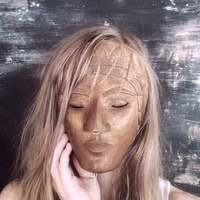
Phaedrus
Socrates: no, but some two or three stades down, where we cross over toward the one in Agra; and somewhere around there in that spot is an altar of Boreas
// 229ξ
οὔκ, ἀλλὰ κάτωθεν ὅσον δύ᾽ ἢ τρία στάδια, ᾗ πρὸς τὸ ἐν Ἄγρας διαβαίνομεν: καὶ πού τίς ἐστι βωμὸς αὐτόθι Βορέου
//
Agra (the word means both “the hunt” and “the prey”) probably names the place of a temple to Artemis Agrotera (the Huntress) on the Illisus river.
//
Phaedrus: (cont.) anyway the waters appear graceful and clear and transparent and made (epitedeios) for maidens to play (paizein) beside it
// 229β
χαρίεντα γοῦν καὶ καθαρὰ καὶ διαφανῆ τὰ ὑδάτια φαίνεται καὶ ἐπιτήδεια κόραις παίζειν παρ᾽ αὐτά
//
Helena at the mirror
i want 2 read Aristotle
with u
in private
in Greek
i want 2 show u every word
i want us 2 go slow and thorough
i want 2 find the perfect way
words right thru until tomorrow
first the physics, then the ones
that come after the ones on physics
parts of animals before poetics
the lost books of poetics, too
O beloved flood of words
can we read clock-
wise and counter-
at once?
πολλαχῶς λέγεται τὸ ὄν
and don’t f—k it up
//
back in her bones, an animal holds
or is held by or stretched by
or broken or taken or raped by
or mended by the word
dismembering that ended carcass
and read like knives the one-way road
apart, a mince of sentences
by university of butchers
by that unkind yet counting world
where have they tipped the ante yet
i tremble to look at it
switching tabs to the deadly news
so walking the ramparts; yes, and
the corpses i see, or telegraphic
trick, the Sphinx’s vexing prize
that riddle i still can’t remember
//
and would we take up arms
against the legendary walls
of Troy, discrete infinities
by logic of desire
by Tyndarean oath
soulquaking fear
kinsplitting lust
or unendurable rage
and would we, trembling
turn the word around our grief
with blinded eyes, who work
the catastrophes of love
//
and who was she, her silk slippers
silent across the golden floor
the guarded pit of destined apple
lily white eye of the bloody storm
her syllables locked in a jewelry box
the whole word, world-ending woman
wordsmith of disinterested tools
worldsmith of sterile fiction
if she could only work it through
her desperate clarity for water
self remembering un-working war
a verb for herself wrung clean
but how she loved and if she did
then would she trust herself by daylight
and could she stand a beautiful nude
Helena at the mirror
//
and would we return true again
victorious from Troy
unbent, discrete infinities
by logic of desire
by twists and turns
by Hades passage
in our angry season
and Agamemnon, dead
and would we, trembling
turn the word around marriage bed
with blinded eyes, who work
the catastrophes of love
//
our organism element
our weaving waiting whom to see
low past the meadow, nettling
the rising and setting sun
the leaves are falling as you love
to be making music until sleep
from infant inhalation through
a rousing breath of song
these outward limbs are turning one
and inward twelve again, like pain
as stirring deep the earthy cauldron
bedroom of a virgin dream
and see the carp still strumming nerve
around the liquid shield for her
a flaming champion of rest
in the rolling river sphere
//
i want 2 b the brilliant word
with u
in the grove
approaching evening
she measures limbs of me by bird
my tragedy like comedy
she murders for imperfect love
and laughing plays me gently dead
as floating messengers of grass
deliver specks of sparkling pollen
to flutter nymphian hurricanes
and suckle clumsy in the flowers
do u know her now; of cursed word
flown round, pre-history again
swan daughter shining, self less law
of no returns, like poetry
ὦ φίλε Φαῖδρε, ποῖ δὴ καὶ πόθεν;
u b her lover 2
//
don’t b mad
at my posterior
analytics 4 u
hills of empties
not 2 much
& watch it thru
//
selamat hari raya Kuningan🌾
Phaedrus: tell me, O Socrates, isn’t it from someplace here by the Ilisus, it’s said that Boreas carried off Oreithyia?
// 229β
εἰπέ μοι, ὦ Σώκρατες, οὐκ ἐνθένδε μέντοι ποθὲν ἀπὸ τοῦ Ἰλισοῦ λέγεται ὁ Βορέας τὴν Ὠρείθυιαν ἁρπάσαι;
//
Boreas is the god of the cold north wind, storms, and winter; known for his abduction and rape of the Athenian princess Oreithyia.
Phaedrus: then do you see that lofty platanos tree?
// 229a
ὁρᾷς οὖν ἐκείνην τὴν ὑψηλοτάτην πλάτανον;
//
Platanus orientalis, known for its longevity and spreading crown; whose name is similar to that of the poet.
//
Socrates: go ahead then and look for anyplace we might sit
// 229a
πρόαγε δή καὶ σκόπει ἅμα ὅπου καθιζησόμεθα
//
Socrates: turning aside there, let’s go along the Ilissus; and then we’ll sit down wherever it seems (doke-o) to be in a stillness (hesuchia).
// 229a
δεῦρ᾽ ἐκτραπόμενοι κατὰ τὸν Ἰλισὸν ἴωμεν, εἶτα ὅπου ἂν δόξῃ ἐν ἡσυχίᾳ καθιζησόμεθα
//
Phaedrus: (cont.) but where do you wish us to sit down and read? (anagignosko)
// 228ε
ἀλλὰ ποῦ δὴ βούλει καθιζόμενοι ἀναγνῶμεν;
//
Phaedrus: (cont.) you’ve beaten me back (ekkrou-o) from my hope, O Socrates, that i would get to exercise (eggymnaz-o) on you
// 228ε
ἐκκέκρουκάς με ἐλπίδος, ὦ Σώκρατες, ἣν εἶχον ἐν σοὶ ὡς ἐγγυμνασόμενος
//