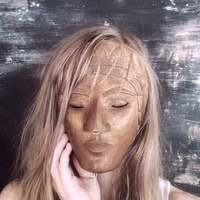
The cats are smothering me and literally making it impossible to type. They look at me like it’s my fault for bothering them!

Ayu’s strength. (Hometown)
E. says “I am from Pesantren” the way Mystique Summers said “I am from Chicago.” Declaring victory and throwing down a gauntlet.
Half the people from his hometown say half of their words backwards, this is Arema slang, gleeful insider speak, encoded against outsiders. (Not least, law enforcement, which, never forget, is rotten to the core.) Aremaisme, Easternoil, is a spirit, unassailable.
I never met anyone more hometown than my husband. I told him that and I got a whole lecture on the meaning (spiritual, mythical, historical, etymological) of Tumpang. I can only smile.
The only place in America that I miss is a lake. I used to walk around it almost every day and take pictures of it. I took so many. Different seasons, different times of day, different perspectives. Sometimes I look at those pictures and weep. That’s it, all I loved of that place, was the lake. And I do miss it, so much, the only place I long to visit. If I ever went back, to America.
(There are people, that’s different. Possibly a school… But certainly not a town.)
I’ve spent a great deal of time thinking about America (“The United States” of it). But the country where I was born has been, for me, something to understand, and if possible, to overcome. I am a political animal. We are political animals. But we are more than that. Love is the cause and the demonstration.
So. If I have a hometown, it isn’t quite mine.

Drift.
On the road, memories of Java. Baluran a looming shadow on the left, Ijen somewhere to the right, cloaked in a grey day that fades to black, as grimy trucks metamorphose to arrays of rippling lights, inscrutable expressions ever gnawing at the pass.
And Ibuk, the eroding centerpiece of every Java trip. No longer as individuals but as genres of people, we enter her life. E. as son, husband, father. I as myself or Other Elizabeth, both of whom Ibuk trusts and likes, to whom she whispers untranslated secrets. An intimate unknown. Until she loses the thread. Then she trusts nobody, wants nothing but to grab a nearby bag (of what?) and flee on foot. She fights to do it, tooth and nail and shouts and cries. The family contains her as best they can. I try to comfort my husband. Alzheimer’s may be the cruelest disease.
(Other Elizabeth is, in a twist of circumstance strange even for here, an American woman who came to the village some twenty-five years before me, also blonde, rumor suggests an intelligence agent? She married a local artist and studied dance and voice with Ibuk. Then left Indonesia, taking with her a large collection of E.’s fathers masks. Present status unknown.)
My feelings for Java remain so ambivalent, it demands so much, of both of us. Nothing here is convenient or comfortable or predictable. I can’t say if I could ever live here. After Ibuk passes, I’m not sure how alive that question will be anymore.
The possibility of our entry depends on a community coherence that remains presently intact, but seems unsustainable. How the younger generation is being sucked into the same smartphone world as everywhere else. They abandon village life in pursuit of urban status, commodfied glamour, the parasitic myth. They will go back to the village someday, look for it again, find it has disappeared. The same story, so many times over. At what point does one give up the ghost?
Presently, in Bali. Jeki on my lap, sulit girl, karmic helper, I am home. Angry-happy to see us, now cuddly and precocious, soon she will be off again. I must reweave loose threads so things don’t fall apart. Memories of last night (this morning) are a dark dream.
Over water, from the ferry. The waves were too big and E. was afraid. (I was afraid to squeeze between trucks. We contain complimentary visions of annihilation.) We went to the upper deck, at the muster point, near the lifeboats, and distracted ourselves deciphering deployment instructions. Heaving swells of black ocean tossed us and all that heavy machinery, sometimes in circles, it seemed. The force of water crashing against steel, the thunk- and vibration of the rudder, resisting, the engine pushing to maintain a direction. (Water does weird things as it switches between seas.)
I had two photos ready for “community”. One, of a tiny mosque we passed the other day, it’s carved decorations painted turquoise blue, golden ochre, like icing on a sweet dessert, neat little gate, (doors closed), blue sky with white clouds, a happy, trim little image. The laws, rituals, and words that bind people together, a place with a pretty shape, clearly defined.
The other, of a graveyard we visited before leaving. The quiet of their interwoven voices, the sound of ghosts in ancient communion. Holding back judgment, as a drawn breath in unison, noticing my presence. Countless gravestones in an old jepun forest.
They keep jepun (frangipani) in the graveyards, in Java. I think I understand why, (a little), the trees leafing out, flowering, or bare, in their staggered cycles. Always saying everything at once, these trees. And in silence. Just like the dead. The image was wild, gnarled, messy edges, poorly captured. Hard to tell what it was, if it was anything, an undergrowth concealing the broken stone markers, grass untended. Disorderly. I waited for fear, but instead it felt calm, soothing. Everyone here has seen too much. They don’t shout. They are not afraid.
I felt expected there, to be honest. It was some kind of welcome. Difficult to admit, but I am difficult to admit. A slow, almost flat exhalation. Without pain. Savasana.
It was on the ferry, waves heaving underneath us, (another graveyard below, don’t forget the ferry that was sucked down, in this very crossing, just a few years past), that I, fingers stumbling to touch the right buttons, posted that photo. Unsure of everything, in that moment. The meaning, the memory, what it would be. Probably we would be fine, I said to E., and we were. Someone threw up their dinner over the side, was all that was lost. Everything else, aman.
Now, Jeki stretches out on my lap. Special when she shows this much affection, comfort, trust, her paws and whiskers twitch, she is in her own dream. I think about why it is, that I love best the most difficult things, and I get back to life here, in Bali. Where I sweep my own floors, we brew our own coffee, and make the day as familiar as the medium allows.

Community.

Substance, subject, surprise.
They were there for hours. Taking turns, back and forth, one posing while the other took a picture. I wandered off, looked for other images. Wandered back again, they were still there. Wandered off, and back again, they had not left. They seemed oblivious to the queue that had formed, other people who wanted selfies with the rocks. Everyone was shifting, impatient. Sometimes giggles, rolling eyes. A vague sense of injustice. How many pictures could two guys need? How many different poses? Nobody knew what to do.
Standing there, looking through my viewfinder, puzzling out the situation. I felt a momentary sense of responsibility. As the only foreigner on the beach, I commanded a certain celebrity. (Three different people had asked to take photos with me. I was almost as popular as the rocks!) Was the onus on me to approach the greedy guys, to suggest they give other people a chance?
Of course not. What an absurd thought. But it did occur to me, in passing.
I almost wandered off again. But then, I stopped, and took the picture. With them in it. I guess, to see what the camera would see.
Later on, as I was editing that photo, assuming I wouldn’t use it for anything, I realized, oh. My editor has a tool that can erase them. With a swipe of my finger, I tried it, I cleansed the image of the weird intrusion, the bothersome presence. There, I thought, empty landscape. Relief. Just the rocks, no posing guys. More like how it should be… more like how it is.
But, no… it was wrong. The image was off. Could it be? I missed them. I can’t say why. I put them back. These silly guys, these human figurines, with their matching shirts, and distressed jeans, I zoomed in to see up close, their idea of how they wanted to be seen. It was their performance. I could change a lot of things, the highlights, the shadows, the vibrance, whatever. But they changed the world. I couldn’t stop it, they made it what it was.

Praying mantis. (critter)

Spine.
To the boy who grew up in a house of mirrors. Who learned from the start that you can’t see the truth. Your anger is real, because behind it, is something that is real. Never pretend that there’s not. The things that you have to do, I cannot tell you to do. I can only take a picture. And deliver these words from a future self, who is not as alone as you imagine him to be: take care as you fight your way out.

Light on Tengger.
Maybe someday I will share the story of how H. saved my life. I otherwise don’t know how to describe him. He is a direct descendant of the first Tengger people. He has a deep acquaintance with the land, is quiet, serious, a secret mystic. Tonight he and S. visited us for nongkrong (chatting). I showed him my pictures of Tengger and he offered to take us trekking around the caldera, on private paths used by villagers and rangers. Just taking a moment to be wonderstruck by this possibility.
Here is an irony of anonymity, that anybody who knows you, will know that it’s you!
The beach is crowded with people, fully covered, women veiled. The waves are too strong to go in. The sky is indeterminate, a blinding bright grey, and an atmosphere of intense social engagement. Carefully planned outfits for selfies with rocks. Children playing with plastic. Men feeling useless. Women squinting at tiny mirrors, applying lipcolor. For whom? For the water? Ocean, though present, seems very far away. A symbol, abstracted from itself, in a sullen sort of mood.
The morning after a big (for me!) family picnic at the beach. My mind is full of words that I don’t understand. They buzz around like bees without a colony. New language (like new body) takes energy I don’t notice until it’s spent, unintentional work, the work of receiving. Receiving pieces, patterns, purposes, sounds. Bees looking for jobs, words looking for definition. Me, feeling depleted, but also rowdy inside. Discombobulated!

Ocean dreamy.

Blue.
Leftover notes from yesterday, recorded with morning coffee today. //
We met a guardian of the path at Ranu Pane, sitting on his sleeping mat, with a fire to keep his toes warm. And his bag of snacks, a jolly fellow. Stopped for a chat about mutual friends, traditional farming methods, and the corrosive effects of tourism. Always, what a small world it is, around here. //
The scent of woodsmoke in the mountains, memories of that. //
E. and I got a lot of weird looks from local tourists yesterday, this isn’t typical. Not sure why. People see me, assume E. is foreign too. Stare, heckle us, snap pictures with their phones. //
We saw at least two motorbike accidents on the mountain roads yesterday. Both women, one looked like she was fine, the other one looked very bad, she had blood running down her face, appeared pale and grey. Many had already stopped to help, so we drove on… //
A transport truck couldn’t make it up one of the inclines, it was overloaded with potatoes. “Boss goblok,” said E., who jumped out and helped push it to the next pull-over point. //
The high-altitude villages around Lumajang, which primarily grow green onions, smell like green onions. You catch whiffs of it as you drive through. //
I have clearer photos of the lutung but those feel private. //
I also have pictures of Gunung Batok, will probably share later. //
I have to relearn how to use “the good camera”, another reason it’s ok we didn’t see Bromo yesterday, my camera skills are not (yet?) worthy. //
I forgot my carnelian stone at home, I realized. //
Always, a beginner, again. //

Orang gunung/mountain person.